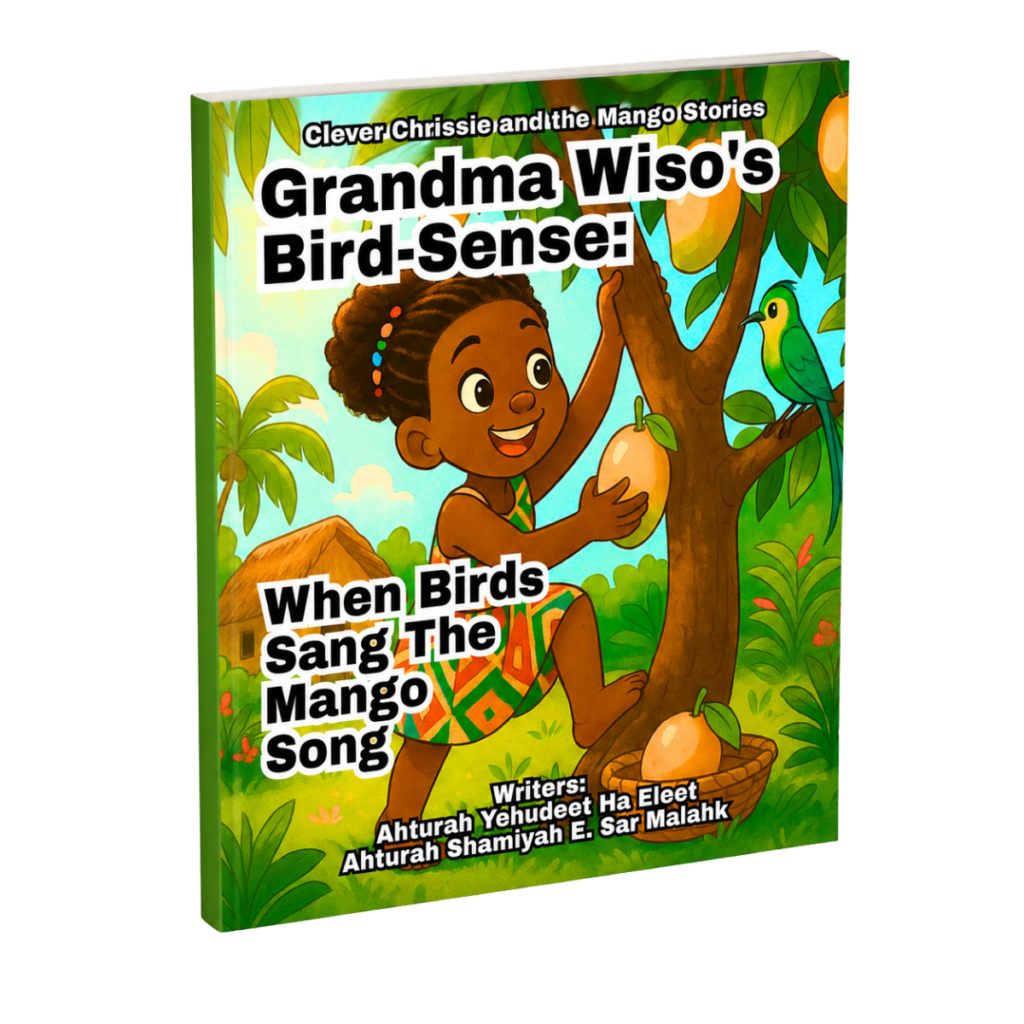
Children’s books do more than fill quiet moments before bedtime. They help children understand who they are, where they come from, and how they belong in the world. This is one of the beautiful themes running through Grandma Wiso’s Bird-Sense: When Birds Sang the Mango Song, a story rooted in family, sharing, community, and cultural memory.
At the heart of the book is young Chrissie, a spirited child in Trinidad who loves mangoes, family, and the wisdom of her grandmother. Through a simple story about sharing fruit, children are invited into a much larger lesson about caring for others, listening to elders, respecting nature, and living as part of a community. The mango becomes more than something sweet to eat. It becomes a symbol of home, memory, culture, and connection.
Cultural identity is deeply important in children’s literature because children need to see their families, foods, landscapes, language, music, elders, and traditions represented with beauty and dignity. When a child sees a character who looks, speaks, eats, sings, and lives in ways that feel familiar, the story quietly says, “Your life matters. Your culture belongs here too.”
This book also shows how culture is passed down. Grandma Wiso does not teach Chrissie through scolding. She teaches through story, example, rhythm, nature, and ancestral wisdom. That is the power of culturally grounded storytelling: it preserves memory while shaping character.
For children outside the culture, the book opens a window into Trinidadian life, Caribbean warmth, community values, and earth-centered living. For children within the culture, it becomes a mirror of pride.
Grandma Wiso’s Bird-Sense reminds us that stories can teach sharing, kindness, and sustainability while also protecting something precious: the cultural roots that help children grow strong, confident, and connected.